FIELD NOTES / POLITICAL ADVERTISING IN INDIA
Indian elections.The digital campaign.
Inside Ads By Akshar’s election advertising work. The platforms, delivery figures and day-to-day execution across municipal, Assembly and Parliamentary campaigns.
Explore this page ↓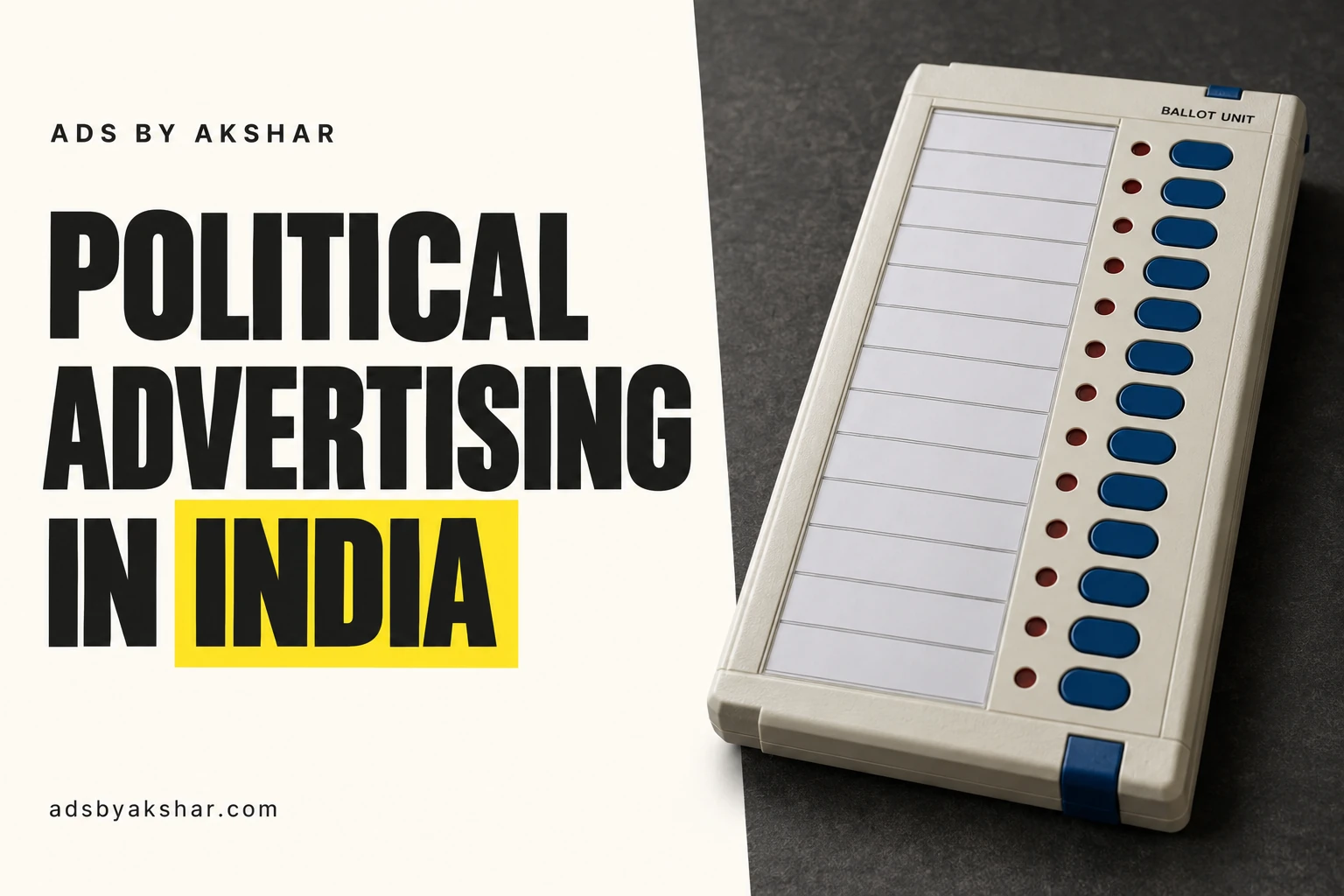
FROM THE CAMPAIGNS
The reported
delivery figures.
Ad impressions
Ad impressions
Impressions count ad displays. They are not unique voters or election results.
BEHIND THE CAMPAIGN
A fixed election window.
A lot of moving parts.
There is more to a digital election campaign than slogans and visuals. Timing, platforms, approved material and daily monitoring are all part of getting the work delivered.
This article draws on Ads By Akshar’s work across Telangana and other states. Candidate names and budgets remain confidential. Here, we share the delivery figures and the work behind them.
Explore our political advertising work ↗WHAT THE NUMBERS MEAN
Why impressions matter in this account
Most digital agencies that come into election work bring performance marketing instincts. They optimize for clicks. They celebrate engagement rates. They run A/B tests on CTRs. They treat the campaign dashboard like an ecommerce store.
The reporting needs to match the campaign objective.
An election takes place on a fixed date. This campaign account therefore focuses on delivery within the permitted campaign window, rather than a purchase or lead-generation funnel.
The account reports 3.7 million Meta impressions and 968 thousand Google impressions. These describe advertising delivery. On their own, they do not establish unique reach, voter recall or votes won.
The fundamental difference
In commercial advertising, you optimize for the lowest cost per conversion and let volume grow from there. In political advertising, you optimize for the highest controlled reach within a defined geography and time window. The question is never "how cheaply can we get a click?" It is "how completely can we saturate the right audience before election day?"
SIX PARTS OF DELIVERY
The work behind the ads
Timing, geography, frequency, sequencing, platform mix and creative consistency. These are the six parts of delivery covered in this campaign account.
When to Deploy
Where to Concentrate
How to Pace Delivery
Message Wave Structure
Meta vs Google vs Both
Avoiding Narrative Drift
META + GOOGLE
Two platforms. Different placements.
The 3.7 million Meta impressions and 968 thousand Google impressions were not distributed by accident. Each platform was used for what it does best in a political context.
| Platform comparison | Meta Ads | Google Ads |
|---|---|---|
| Primary Role | Emotional narrative reach | Search presence and credibility |
| Audience Targeting | Geographic + demographic | Geographic + keyword intent |
| Creative Format | Video, image, carousel | Search, Display, YouTube |
| Voter Touchpoint | Social feed, passive exposure | Active search, intent signal |
| Shareable? | Social sharing where available | Depends on the placement and format |
| Impression Volume | 3.7M+ reported impressions | 968K+ reported impressions |
ACROSS ELECTION TIERS
From setup to daily monitoring
The execution framework applies across election tiers, Mayor, MLA, and MP, with the same structured delivery sequence. Constituency size and budget scale differ, but the architecture is identical. Campaign objectives were set to reach and impressions, not conversions. Geographic targeting was restricted to the specific constituency boundaries. Frequency caps were applied to prevent oversaturation. Creative rotation was managed to maintain message freshness without narrative drift.
Local elections
MLA / Vidhan Sabha
MP / Lok Sabha
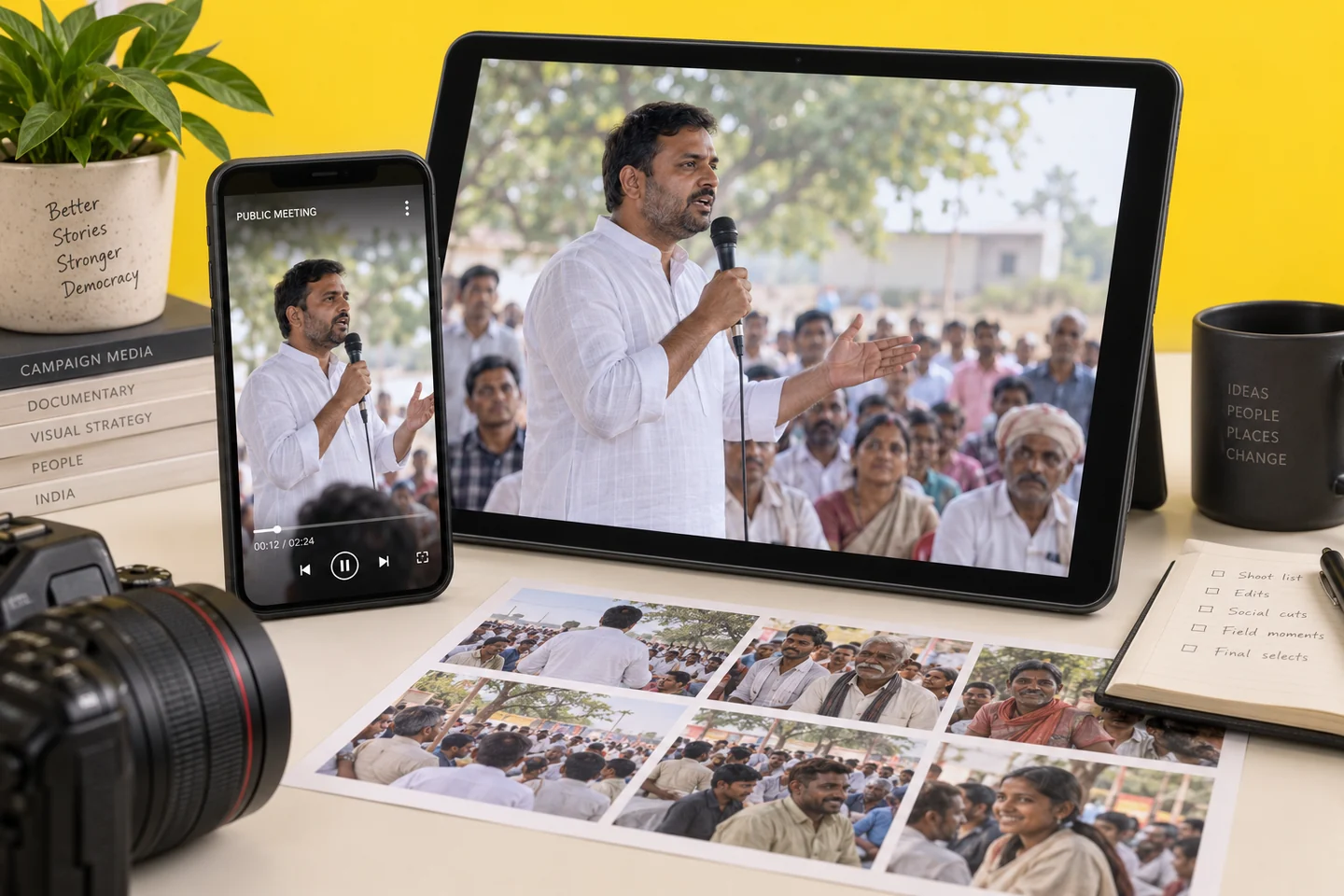
Constituency Mapping and Audience Sizing
Before a single ad runs, the geography is defined precisely. Ward boundaries, voter density by area, and platform audience size estimates are verified. This determines realistic impression targets and budget requirements to achieve meaningful frequency within the constituency.
Campaign Structure: Awareness Wave First
The first phase builds name and face recognition. Broad reach, high impression volume, simple messaging. The goal is ensuring that when the voter encounters the candidate's name elsewhere, on a hoarding, in a newspaper, at a rally, it is already familiar. Familiarity breeds credibility at scale.
Narrative Reinforcement Phase
Mid-campaign delivery shifts to issue-based and achievement-based messaging. The voter who has seen the candidate's face now sees their work. This is where the psychological build happens, awareness converts to association. The creative work here is more demanding because it must communicate substance, not just recognition.
The campaign stop time
The final 48 hours cannot be treated as a routine advertising push. Section 126 restrictions apply during the 48 hours ending at the scheduled close of polling in the relevant polling area. The schedule must follow the applicable election instructions, including phased-election rules.
ECI guidance on the silence period ↗Real-Time Delivery Monitoring
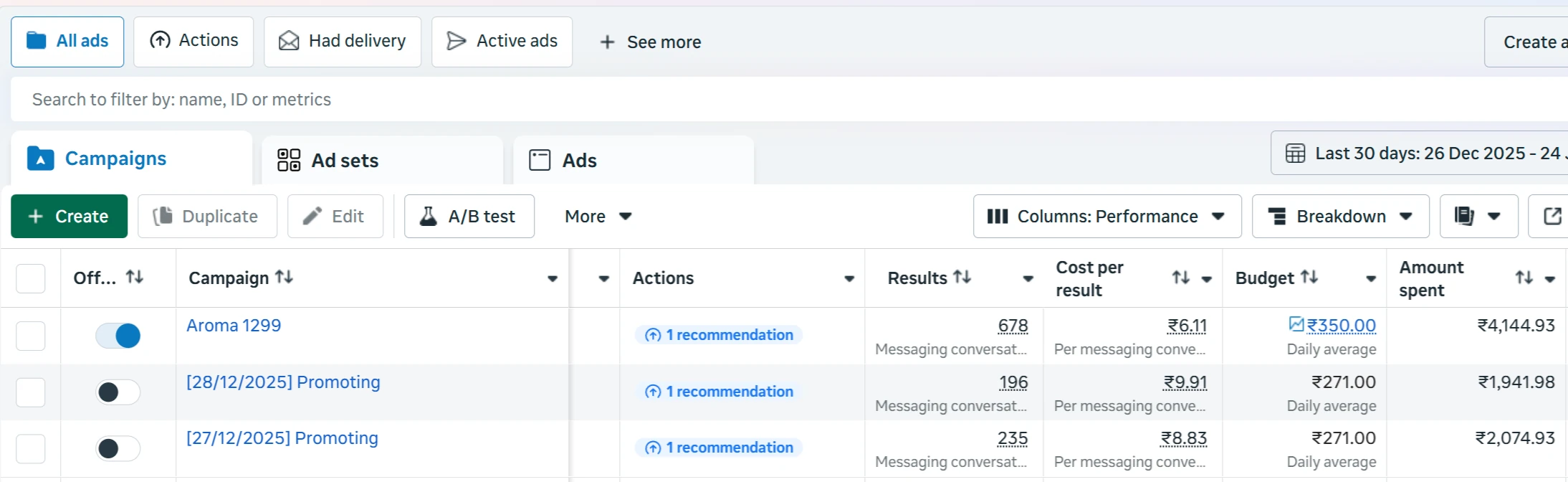
Impression pacing is monitored daily. If Meta delivery is under-pacing due to auction competition, Google budgets are adjusted to compensate. If a specific ward shows weak delivery, geographic bid adjustments are made. Election advertising is not a set-and-forget operation. It requires daily active management from the first day to polling day.
Reach is not the enemy. Uncontrolled reach is. The difference between a loud campaign and an effective one is sequencing. Message waves must land in rhythm.
WHAT TO WATCH
Four common campaign mistakes
The chosen metric, budget timing, repeated exposure and location settings are four recurring issues covered in this account.
Optimising for Clicks
Budget Front-Loading
Ignoring Frequency Caps
Generic Geographic Targeting
QUESTIONS & ANSWERS
Questions campaign teams ask
Things political campaign teams ask when they find this page.
How do political campaigns in India use Meta Ads?
Political campaigns use Meta Ads primarily for impression-based reach campaigns during active election windows. The objective is controlled frequency delivery, ensuring the campaign message reaches the right geographic audience repeatedly within the election period. Campaigns are structured around impression flow, timing, and geographic concentration rather than performance metrics like clicks or conversions.
What is the difference between political advertising and performance advertising?
Performance advertising optimises for conversions, leads, or sales. Political advertising optimises for psychological presence, ensuring a candidate's narrative reaches voters with sufficient frequency to influence awareness and recall. The metrics that matter in political campaigns are reach, frequency, impression distribution across geographies, and message sequencing. Click-through rates are largely irrelevant.
Can Google Ads be used for election campaigns in India?
What makes political advertising different from regular digital marketing?
Political advertising in India is fundamentally a logistics and delivery problem. The election window is fixed, the geography is defined, and the audience is the entire voter base in a constituency. Unlike commercial campaigns where you target buyers, political campaigns need to reach everyone in a defined area with controlled frequency. Timing, sequencing, impression pacing, and narrative discipline matter more than creative performance.
Does Ads By Akshar run political election campaigns in India?
Yes. Ads By Akshar has executed political advertising campaigns in India across multiple election tiers, Mayor and Municipal elections, MLA and Vidhan Sabha elections, and MP and Lok Sabha elections. Campaigns have been managed across Telangana and other states for multiple candidates. All candidate names, budgets, and campaign details remain strictly confidential. Delivery outcomes like impression volumes are the only numbers disclosed publicly. To discuss a campaign, WhatsApp directly, all conversations are confidential.
KEEP READING
More from our work
Real campaigns, real data, real results.

ADS BY AKSHAR
Practical work.
Useful perspective.
Based in Hyderabad. Working with businesses across India.
Our story ↗